Source cotton kids baseball jacket for sports, school, and play
Compare 30 listings for cotton kids baseball jacket options including ODM services, various fabrics like polyester and woolen, and seasonal designs. Buyers can review specifications such as closure types, filling materials, and customization features from verified manufacturers.
Key considerations
Products List
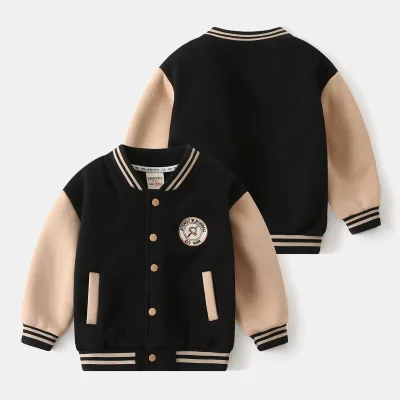
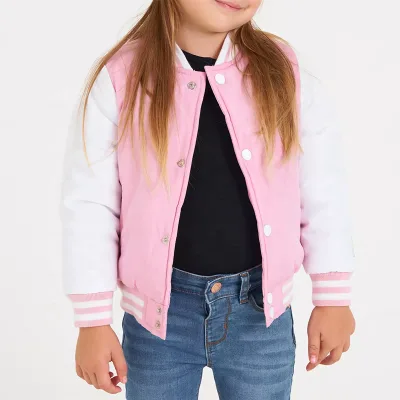
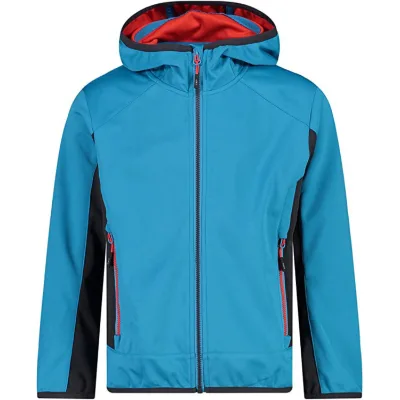


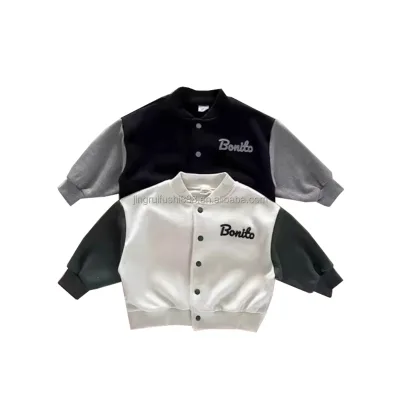



Comprehensive Sourcing Guide
Strategic Sourcing Guide for Cotton Kids Baseball Jackets
When initiating a procurement strategy for children's outerwear, specifically targeting the niche of cotton kids baseball jackets, buyers must navigate a complex landscape of material definitions, supply chain realities, and technical specifications. The term "cotton" often implies a specific tactile feel and breathability, yet the actual market inventory for this category frequently presents a hybrid reality where synthetic blends or 100% polyester alternatives dominate due to durability and cost-efficiency. A rigorous sourcing approach requires distinguishing between the idealized material expectation and the actual product attributes available from manufacturers. This guide outlines the critical factors for evaluating suppliers and products, ensuring that procurement decisions are grounded in verified data rather than marketing assumptions.
Material Composition and Fabric Verification
The primary challenge in sourcing "cotton" baseball jackets for children lies in the discrepancy between the search keyword and the actual supply inventory. While the core keyword suggests a natural fiber composition, a significant portion of the available market for this specific style utilizes chemical fibers or 100% polyester. Buyers must verify the shell material through detailed product specifications before placing orders. In many cases, the fabric is described as "Chemical fiber" or explicitly "100% Polyester," which offers distinct advantages such as windproofing and water resistance that pure cotton lacks.
When evaluating fabric options, procurement teams should request physical swatches to confirm the hand-feel and weight. The market data indicates that "Thick" fabric options are common, often paired with "Down Feather" or "Grey Duck Down" filling to provide insulation for winter or transitional seasons. However, if the specific requirement is a lightweight cotton jacket, buyers must be prepared to find fewer options or accept blends that may include synthetic components for structural integrity. The "Fabric Type" listed in supplier catalogs often varies between "Woolen," "Chemical fiber," and "100%polyester as per customer requirement." This variability necessitates a strict verification process where the buyer explicitly states the desired cotton percentage in the Request for Quotation (RFQ) to avoid receiving a polyester alternative.
Technical Specifications and Design Attributes
Technical specifications for kids' baseball jackets extend beyond simple material composition to include detailed design elements that affect fit, function, and safety. The "Product Type" is frequently categorized as "Regular" or "Loose," with sizing ranges extending from "XXS-XXXL" to accommodate various age groups, including children aged 6 through 14 years. The "Clothing Length" is typically "Long," which is a standard feature for bomber-style jackets designed to provide coverage and warmth.
Collar styles vary significantly, with "V-neck," "O-Neck," and "Zipper" closures being the most common observations. The "Closure Type" is a critical functional element; while some designs utilize a "Single Breasted" button configuration, others rely on "Zipper" mechanisms for ease of wear by children. Buyers must carefully review the "Decoration" options, as pockets are a standard feature, but the placement and type (e.g., zippered vs. open) can impact safety and utility. Additionally, the "Pattern Type" can range from "Solid" to "Print," with "printed" methods being the standard for customization. The availability of "Custom OEM" services allows for specific branding, but the "Logo" application method, whether "print" or "embroidery," must be confirmed based on the fabric's ability to hold the design without compromising the material's integrity.
Seasonal Suitability and Functional Performance
Understanding the seasonal context is vital for aligning product selection with market demand. The observed market data presents a dichotomy where products are listed for "Winter," "Spring / Autumn," and general "Season" usage. Jackets with "Down Feather" filling and "Thick" specifications are clearly intended for colder climates, offering features like "Windproof," "Waterproof," and "Breathable" performance. These attributes are essential for children's outerwear to ensure comfort and protection against the elements.
Conversely, lighter options may be marketed for transitional seasons. The "Feature" list often includes "Anti-Wrinkle," "Quick Dry," and "Eco-Friendly" claims. While "Eco-Friendly" is a desirable attribute, buyers should verify the specific standards or certifications associated with this claim, as the term is often used broadly. The "Reversible" feature is another high-value attribute found in some listings, offering two styles in one garment. However, the "Gender" specification varies, with some products targeting "Women" or "Adults" despite the "Kids" keyword, indicating a need for precise filtering during the sourcing process. Buyers must ensure the "Applicable User" matches the target demographic to avoid purchasing adult-sized or adult-style garments for children.
Cost Drivers and Minimum Order Quantities
The financial structure of sourcing these jackets involves several variables, including the complexity of the design, material costs, and order volume. The observed "MOQ" (Minimum Order Quantity) ranges widely, from as low as "10" pieces to "1000" pieces, with a common threshold of "100pcs per color." This variability allows for flexibility depending on the buyer's inventory strategy, whether they are testing a new design or fulfilling a large seasonal order. The "Supply Type" is often a mix of "ODM," "OEM service," and "In-Stock Items," each carrying different cost implications. In-stock items may offer faster delivery but limited customization, while OEM services provide full design control but require longer lead times.
Production lead times are another significant cost driver. The standard "Production Lead Time" is typically "2-3 Weeks" or "2025 working days after details confirmed," while "Sample Lead Time" ranges from "710 working days" to "Within 1-2 Weeks." For urgent orders, some suppliers offer "7 days sample order lead time" support, but this may incur premium costs. The "Place of Origin" is predominantly "China," which influences logistics costs and shipping times. Buyers should factor in the "Single gross weight" of approximately "1.000 kg" per unit when calculating freight charges, as this affects the total landed cost. Payment terms such as "T/T," "Paypal," "WU," "Bank transfer," and "Trade Assurance" are standard, and the choice of payment method can impact cash flow and risk management.
Supplier Evaluation and Compliance Verification
Evaluating suppliers requires a multi-faceted approach that goes beyond price comparison. The "Supplier Type" is listed as "Manufacturer," which suggests direct control over the production process, potentially offering better quality control and pricing. However, buyers must verify this claim through due diligence. The presence of "ISO 27001:2022" in background data is noted, but this standard relates to information security rather than textile manufacturing quality. Buyers should not assume a supplier holds this certification unless explicitly verified through documentation.
Compliance checks should focus on safety standards relevant to children's clothing, such as flammability, chemical restrictions (e.g., AZO dyes, formaldehyde), and physical safety (e.g., small parts, drawstrings). While specific test results are not provided in the general data, buyers must request third-party lab reports to confirm compliance with destination market regulations. The "Customization" availability is a key differentiator; suppliers offering "Custom OEM" services should demonstrate a robust design and prototyping capability. Buyers should assess the supplier's ability to handle "Any size" requests and their flexibility in managing "Color" variations like "Sky Blue," "Blue," "Khaki," "Black," "Pink," "White," and "Brown."
Quality Control and Long-Term Procurement Strategy
Implementing a robust quality control (QC) protocol is essential for maintaining brand reputation. Given the variations in "Fabric Type" and "Filling Material," pre-shipment inspections are critical. Inspectors should verify the "Shell Material" matches the contract specifications, checking for consistency in the "100% Polyester" or "Chemical fiber" claims. The "Filling" material, particularly "Down Feather" or "Grey Duck Down," requires specific attention to ensure the fill power and cleanliness meet the agreed-upon standards.
For long-term procurement, establishing a partnership with a supplier who offers "Service: Custom OEM" and reliable "Production Lead Time" is beneficial. The ability to maintain consistent quality across multiple orders is paramount. Buyers should consider the "Single package size" of "15X15X25 cm" for storage and logistics planning. Furthermore, the "Keywords" associated with the product, such as "kid jacket" or "Wholesale Boys Button Jacket," indicate the marketing positioning. Aligning the product attributes with the intended market positioning ensures that the sourcing strategy supports the brand's value proposition. By focusing on verified specifications, clear communication of requirements, and rigorous quality checks, buyers can successfully navigate the complexities of sourcing cotton and hybrid kids' baseball jackets in a competitive global market.
FAQs
What fabric is used for these kids jackets?
The jackets are primarily made of 100% polyester or chemical fiber. Some listings specify woolen fabric types, but the shell material is consistently synthetic to ensure durability and windproof performance.
Can I order a sample before placing a bulk order?
Yes, sample orders are supported with a lead time of 7 to 10 working days after details are confirmed. Some suppliers also offer a 7-day sample order lead time for urgent requirements.
What is the minimum order quantity for customization?
The standard MOQ is 100 pieces per color, though some suppliers accept orders as low as 10 pieces. Any size is generally acceptable within the specified range of XXS to XXXL.
How long does production take after details are confirmed?
Production typically requires 20 to 25 working days after all details are confirmed. Some manufacturers list a shorter production lead time of 2 to 3 weeks for standard orders.
Which filling materials are available for winter jackets?
The jackets often feature Down Feather or Grey Duck Down filling for insulation. These thick jackets are designed for winter and transitional seasons to provide windproof and breathable protection.
Are these jackets suitable for children aged 6 to 14?
Yes, the product is designed for children aged 6 through 14 years. The sizing range covers XXS to XXXL to accommodate various age groups and growth stages effectively.